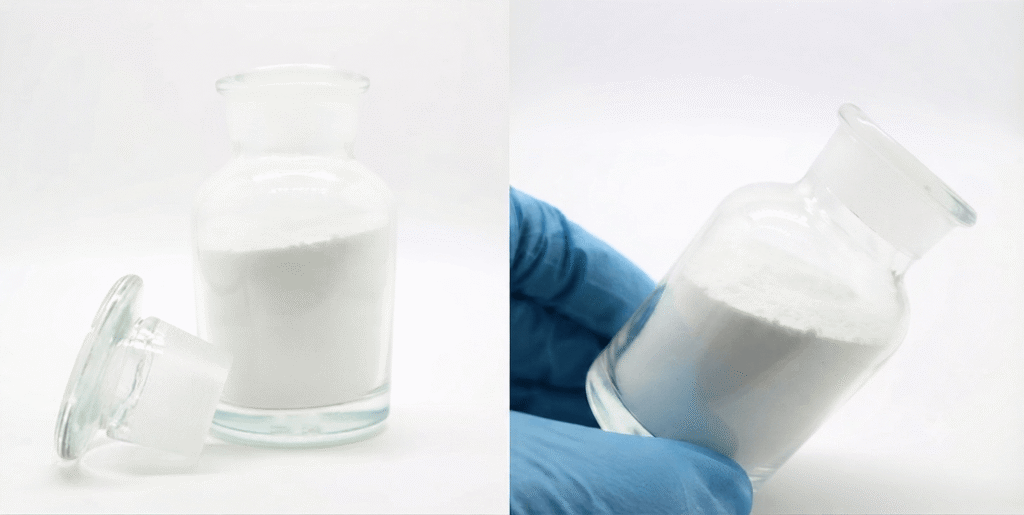
In the industrial production process of biopharmaceuticals, food, fermentation, etc., the existing foam problem has always been an inevitable problem. If a large amount of foam is not eliminated in time, it will bring many problems to the production process and product quality, and even cause material problems. Waste, reduce production efficiency, severely prolong the reaction cycle, reduce product quality, etc. Of course, what is better here is to use chemical defoaming methods, we can recommend a polyether defoamer. The defoamer is easy to use, low in cost, quick in defoaming, good in defoaming effect, and long in antifoaming time, which is accepted by most manufacturers.
Polyether defoamer is mainly a strong defoamer obtained by polymerizing propylene glycol or glycerol with propylene oxide, ethylene oxide, etc. under the catalysis of potassium hydroxide. It is characterized by environmental protection, high efficiency, no color spots, etc. It is suitable for the needs of most silicon-free defoamer industries as defoaming and foam suppression.
Performance characteristics and usage
Fast defoaming and less dosage. Does not affect the basic properties of the foaming system. Good diffusivity and penetration. Chemical stability and strong oxygen resistance. No physiological activity, non-toxic, non-corrosive, no adverse side effects, non-flammable, non-explosive, high safety. In terms of use, the defoamer should be added in a small amount and multiple times. This product can be heated and sterilized into the tank with the original solution and the fermentation base material, or it can be prepared into a water emulsion, which is directly steam sterilized and then “flow added” into the tank for defoaming. The antifoaming agent emulsion preparation tank is equipped with a mechanical stirring device, so that the antifoaming agent can be fully dispersed and uniform, and the ideal defoaming effect can be achieved.
Factors Affecting the Performance of Polyether Defoamer
The effect of different initiators on the performance of polyether defoamer, the effect of different block methods on the performance of defoamer, and the effect of different epoxy segment lengths on defoaming performance.